360 Insights
Get the feedback you need, not the feedback you want.
The higher you climb, the fewer people tell you the truth. Somewhere between the promotion and the corner office, feedback stopped being honest and started being careful. 360 Insights is the facilitated process that gets it back: real input from the people above you, beside you, and below you, gathered in confidence and unpacked with you until you can actually act on it.
Feedback is a gift
The people closest to you rarely say it straight.
Raw, real, honest feedback is what turns a good leader into an outstanding one. The problem is that almost nobody around you will give it to you straight, because you are the boss, and honesty feels expensive to the person delivering it.
Anton Rabie is co-founder and Chair of Spin Master, the company behind PAW Patrol and Hatchimals, now more than $2 billion a year. He has spoken openly about the first review he received as co-CEO: a 5.8 out of 10 on listening. He has described candid feedback like that as humbling, and it sent him to work with coaches and change how he leads. If a founder running a multibillion dollar company had a blind spot that size, the odds are good that you have one too. The only question is whether anyone has told you.
Source: Canadian Business
Somebody in your world needs to tell you what you need to hear, not what you want to hear. This is how you let them.

The stakes
When the room stays quiet, this is what keeps happening.
Decisions get made on a version of reality only the most comfortable voices shaped.
The gap between how you think you are landing and how you are actually landing keeps growing, unmeasured.
Discord on an exec team or in the C-suite festers, because no one will say the thing out loud.
By the time a blind spot becomes obvious, it has usually already cost you something: a person, a project, a relationship you needed.
You do not have to guess. You just have to ask, in a way that finally makes honesty safe.
Why people actually tell the truth here
Honesty only happens under anonymity. So we build two walls, not one.
You never learn who said what, and we never share the raw quotes back, so it is impossible for anyone to trace a comment to a person. In that safety, people give feedback with a candor they will show in no other business setting. Anonymity is not a feature here. It is the mechanism that makes the truth possible.
- Wall one
- You never learn who said what.
- Wall two
- The raw quotes are never shared back.
What you get
Not a spreadsheet. A read, and a plan.
Confidential input gathered from every level around you: above, beside, and below.
Double-walled anonymity, so your people can be fully honest without fear of blowback.
A facilitated read of the patterns underneath the scores, not a spreadsheet you are left to decode alone.
A live debrief, not a PDF you skim once and file.
Two or three specific actions you can actually be held to.

Why this one is different
The feedback comes with a coach.
Information is cheap. Action is where the power is.
Most 360s hand you a report and walk away, and the report dies in a drawer. This one comes from someone who has spent two decades helping leaders actually change, on stage, on the sales floor, and in the room at Stanford. The same person who shows you what the numbers say is the person who helps you change them.
Where the feedback finds something that is costing you, tone that lands harder than you meant, priorities that move before your team can catch them, a gap between your vision and what actually gets finished, that becomes the work. And we can run the 360 again in six months, so you do not just hope the coaching worked. You see it, measured against the same voices that flagged it the first time.
Diagnosis, then repair, then proof. That is the whole loop.
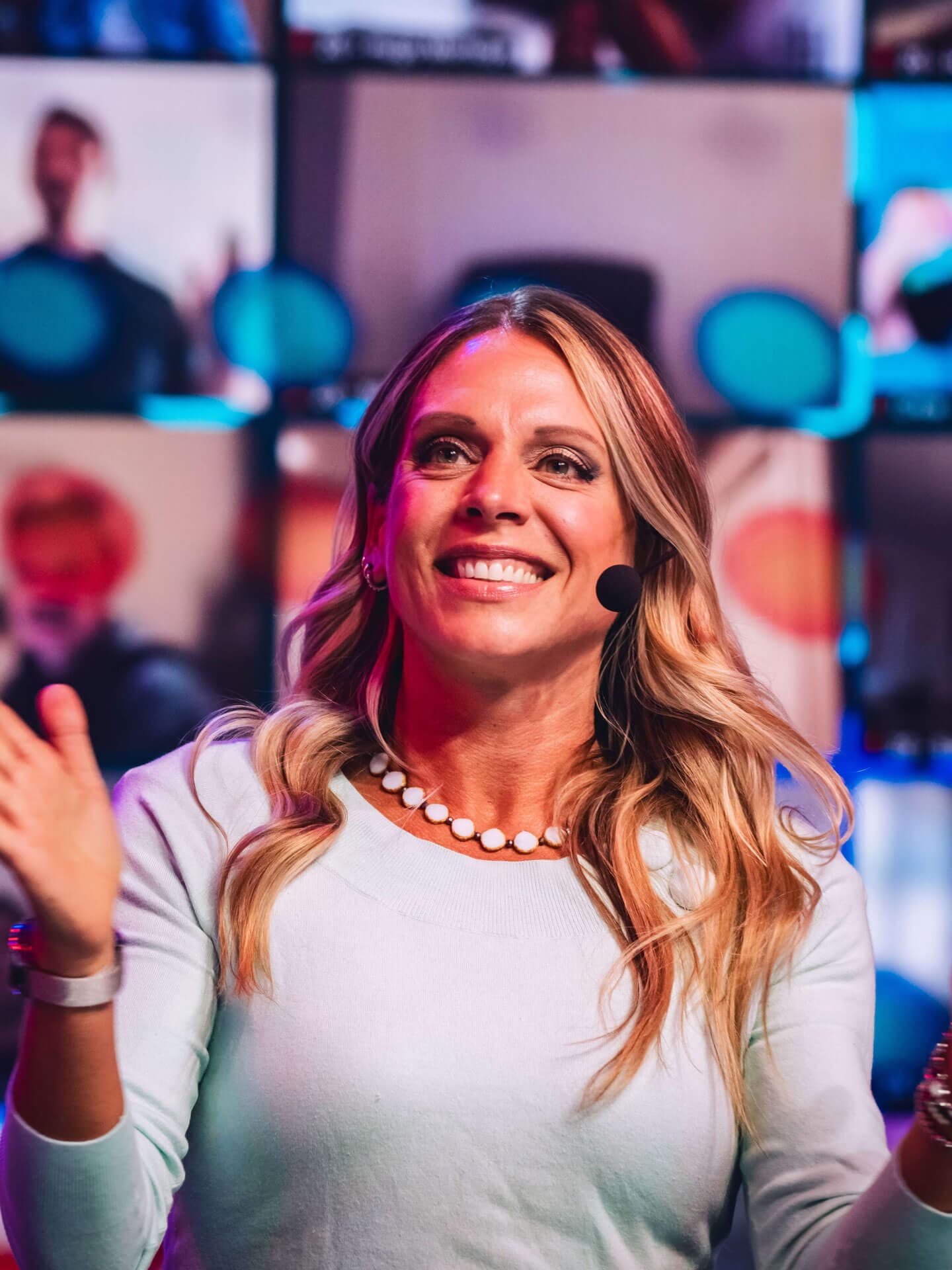

The guide
A coach who reads it with you, then helps you act.
We know what it feels like to sense something is off in the room and not be able to name it, and what it costs a leader to keep running on secondhand impressions instead of the truth. Here is why the feedback in your hands is worth trusting, and why the coaching behind it is worth more.
- 12+ years with Tony Robbins
- Director of Business Solutions and a Leadership and Sales expert, including senior training within his Business Mastery program.
- Two decades of executive coaching
- With founders, executives, and high achievers, most recently as a Fractional CRO and Sales Director who rebuilds culture and systems, not just advises.
- Taught at Stanford
- A Public Speaking instructor for the Business School, with a Stanford Master’s (4.0) and a Stanford BA.
- Certified Master Practitioner of NLP
- Trained in the school of its co-creator, so the work reaches how people actually think and change, not just what they do.
This is not a survey vendor handing you a report. It is a coach who has stood on stage, run the sales floor, and taught this at Stanford, reading your feedback with you and then helping you act on it.
The 360 Insights path
How the 360 process works.
We build the survey
A thoughtful, well-formed 360 designed around your team and what you actually need to learn.
We handle everything
Reminders, data collection, synthesis, and analysis, all managed by a neutral third party so it never pulls you out of your work.
You hear the pattern
A facilitated debrief that presents the feedback in a digestible format and distills it into clear actions.
You close the loop
Coaching on the back end to turn insight into change, plus an optional follow-up 360 to prove it moved.
Why I built this
Feedback is a gift, but only if someone helps you unwrap it.
I have spent twenty years watching leaders get more polite, less honest feedback the higher they climb, right when the stakes are highest and the truth matters most. Handing someone a report and walking away has never once changed a leader. Sitting with them in the hard parts, and coaching them through what to do next, changes everything. That is why I do not just run the 360. I stay for the part that actually transforms you.
Jill Wheaton
Frequently asked questions
The questions leaders ask first.
- What is a 360 feedback review?
- A 360 feedback review gathers candid, structured input on how you lead from the people around you: your manager, peers, direct reports, and sometimes clients or board members. Instead of one boss’s view, you see the full picture of how your leadership actually lands.
- Is the 360 feedback anonymous?
- Yes. Responses are confidential and reported back in themes, not names. People give honest input because they know it will not be traced to them, which is exactly why a facilitated 360 surfaces the feedback you need rather than the polite version you usually hear.
- What do I get from 360 Insights?
- You get a written 360 report organized by theme, a live debrief where Jill walks you through what it means, and a short, prioritized plan for what to change first. The goal is clarity and a next step, not a stack of charts you never open again.
- How long does the 360 process take?
- Most engagements run about three to four weeks end to end: a scoping conversation, the confidential interviews or survey, and then your debrief. Timing flexes around your calendar and the size of your feedback group.
- Does coaching come with the 360?
- Yes. 360 Insights includes a facilitated debrief with Jill, and many leaders continue into ongoing one on one coaching to work the plan. The 360 shows you what to change; the coaching helps you actually change it.
Ready to hear what they actually think?
If the room has gone quiet, this is the next step.
If you have felt the room go quiet, if there is discord on your team you cannot quite name, or you are simply tired of leading on guesses, a 360 debrief is the right next step.
Not ready to book?
Start with a conversation, not a commitment.
Tell Jill where you are and what you are weighing. If a 360 is not the right next step, she will tell you what is.